

8 Best Anonymous Crypto Exchanges: Top No-KYC Options 2026
**The primary compromise lies in the fact that bypassing routine identity checks fails to eliminate compliance (custody), or market risk entirely. ** **Verification is now mandatory on MEXC, rendering it an invalid no-KYC trading choice for active users. ** **Separate risks persist (including exchange failures), phishing, wallet loss, smart-contract vulnerabilities, forged signatures, payment disputes, and leveraged liquidations. ** **While trading without routine KYC isn’t inherently unlawful, adherence to local regulations and platform policies remains essential. **
**In my testing, all three exchanges processed withdrawals swiftly. ** **Since I’m not a legal expert, this isn’t professional advice—always verify your local laws before funding an account. ** **No-KYC eliminates platform-based identity verification but doesn’t waive your domestic legal responsibilities. **
Hyperliquid is a purpose-built layer 1 blockchain designed to deliver fast, low-cost decentralized trading without compromising on user experience. GhostSwap is a no-KYC crypto swap service that allows users to easily exchange between different types of cryptocurrencies, even if they are on different blockchain networks. Please note that none of these exchanges support fiat deposits or withdrawals without verification.
Liquidity grows with adoption (speeds quick via apps), but risks like payment reversals exist—use irreversible methods. RoboSats and Peach Bitcoin extend P2P for BTC (non-custodial with Tor integration for privacy), supporting fiat trades. Liquidity is user-driven (speeds vary by peer responsiveness), risks involve scam attempts countered by ratings. Liquidity depends on active peers, speeds range from minutes to hours, with risks like disputes resolved via arbitration. Peer-to-peer platforms facilitate direct trades without KYC, relying on escrows for trust in 2026. Risks include smart contract vulnerabilities (but audits reduce them; it fits BNB ecosystem users), avoiding the trap of high gas by using its efficient network.
Decentralized exchanges don’t hold your funds, so withdrawals aren’t tied to identity verification. Traders who still prefer a centralized experience can consider MEXC or BingX (keeping in mind that their no-KYC policies can change), and fiat services need identity verification. KuCoin introduced mandatory KYC in 2023, while OKX, Bybit, and Kraken all tightened verification requirements for more products and services during 2025 and early 2026. For these reasons, we avoid treating any centralized exchange as a long-term storage solution. Before buying any unfamiliar asset, it’s best practice to always verify the contract address through the project’s official website or trusted blockchain explorers.
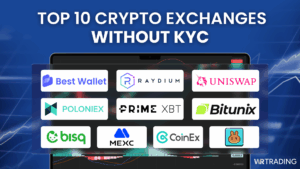
No-KYC trading should be treated as a privacy and convenience feature, not a guarantee of anonymity or legal safety. It is especially relevant for smaller traders who prioritize crypto deposits, crypto withdrawals, and broad market access over fiat services. It operates on a technology called blockchain, which is a distributed ledger that records all transactions across a network of computers.
Uniswap (PancakeSwap), and similar platforms use smart contracts to facilitate trades directly between users’ wallets, making identity collection impossible by design. Yet — these platforms still operate under some regulatory oversight and may eventually require verification for continued use. Centralized exchanges with no KYC options operate through tiered non kyc crypto exchanges verification systems that let you trade with limited functionality before completing identity checks. Hacking risks increase significantly on platforms that prioritize anonymity over security infrastructure. Unregulated exchanges often operate without oversight — making them attractive targets for bad actors who can disappear with user funds overnight. This accessibility makes these platforms valuable tools for maintaining financial freedom regardless of your geographic location.
These platforms usually come with limits, especially on withdrawals. Once verified — the exchange decides what you’re allowed to do on the platform. In simple terms, it means they need to verify who is using their platform. It’s a set of rules that financial platforms like banks and crypto exchanges have to follow. In the end — no-KYC exchanges are mostly suited for people who already understand the risks, trade actively, or don’t have access to regulated platforms.
Always double-check links before connecting your wallet and never share your private keys. In simple terms (it helps limit unexpected losses caused by extreme volatility or liquidation events), making trading slightly more controlled compared to standard DEX environments. Always double-check websites before connecting your wallet and never share your private keys. But to be fair, 150x leverage most traders will not even use as it comes with significant risks. The exchange supports USDT-, USDC-, and Coin-margined futures contracts while allowing crypto withdrawals of up to $20,000 per day without mandatory KYC.
With transaction times ranging from 5 to 40 minutes — depending on the blockchains involved, SwapRocket is an ideal choice for users seeking fast and private crypto transactions. If you want an easier way to keep track of your trades across no-KYC and regular exchanges — KoinX gives you a simple solution. You only connect a self-custody wallet and choose the assets you want to swap, which makes the process simple and private. They can be simple to start with, but beginners face higher risks without support or recovery options.
KuCoin now requires ID checks before you can use its products. No registered Indian exchange operates without ID checks. What is not legal anywhere is using a no-ID route to dodge tax, sanctions or money laundering laws. ID rules fall on the firms that provide the service, not on each blockchain transfer. Using a DEX or trading P2P is legal in most countries. Safety depends on which of the three groups you use, and a simple yes is not an honest answer.
A platform can still offer education access (market information), or limited account functions without verification, but that is not useful for users seeking practical no-KYC trading and withdrawals. MEXC now requires KYC verification for platform access and withdrawal features. Users must verify contract addresses, avoid suspicious approvals, check liquidity depth, and understand that no account-based support team can reverse a bad onchain trade.
Most of these platforms don’t support fiat deposits or withdrawals, so moving money in and out becomes more complicated. With no-KYC platforms (you’re more on your own), and that can lead to mistakes. If you’re a beginner, this probably isn’t the place to start. Most platforms still have limits, especially on withdrawals, block certain regions, or may ask for verification later. This guide is based on our research and testing — but it is not legal advice.
There are actually quite a few other no-KYC exchanges out there (but many of them suffer from poor liquidity), unreliable withdrawals, low trust, or very limited features. Regulations are becoming clearer worldwide, and the grey area many platforms used to operate in is slowly disappearing. Most traders won’t use every trading pair, and many avoid leverage above 50x due to the significantly increased risk. AsterDEX comes next — thanks to its lower fees and stronger privacy options, making it attractive for traders who prefer a lightweight and more private trading experience.