

Sophisticated Luxury Tote The Row Margaux Tote
Maintaining The Row Leather, Suede and Raffia Bags the Right Way
Buy one of these bags and what is absent registers fast. No logo plaque, no coated canvas, no heavy hardware taking the knocks. What you get in exchange is exposed surface: calfskin showing its grain, lambskin linings, suede that marks at the smallest provocation, and a summer raffia weave with no seal on it. Almost all of the care burden of The Row bags belongs to the material itself. Easy to maintain, and unforgiving of an error.
Material is the organising principle here, because that is how the decisions actually break down. The same season can give you a grained calfskin tote and a suede top handle that need opposite treatment, with a sisal bag different again.
Start here: a caveat about care instructions
The Row issues no public care protocol for its bags. No manual exists, no cleaning chart is published, and no brand-approved product line is sold alongside them. Treat all of it as material-appropriate general guidance, drawn from how calfskin, lambskin, suede, canvas and raffia behave rather than from instructions issued by the label. Treat it the way a good leather specialist would: carefully, conservatively, always leaning toward doing less. A definitive brand-issued cleaning routine for these bags does not exist, so anyone presenting one is filling a gap rather than quoting a source. Before anything goes onto a bag you care about, ask a professional.
Why habits outrank products
Routine handling causes most damage to a good bag, which makes the fixes behavioural. With the Margaux and the Park Tote in particular, overfilling is the usual mistake, and it distorts a soft silhouette faster than anything. Adjusting the shape is what the belted side gussets on the Soft Margaux are for, not making room for more. Sun dries leather out and fades it; radiators and car dashboards manage it faster. Rain is harder on unfinished surfaces than people assume, and suede and raffia have almost no defence www.rowbag.com against it. Nothing on a shelf matches the effect of keeping a bag clear of sun, heat and water.
- Empty the bag out before it goes into storage, receipts and anything else that might transfer colour included.
- Leave a soft bag hanging by its handles and the drop stretches, so keep it off the hook.
- Keep pens, keys and cosmetics in a pouch rather than letting them sit loose against the lining.
- Pale calfskin and untreated suede want clean hands.
Calfskin in its four forms: smooth, grained, saddle and polished
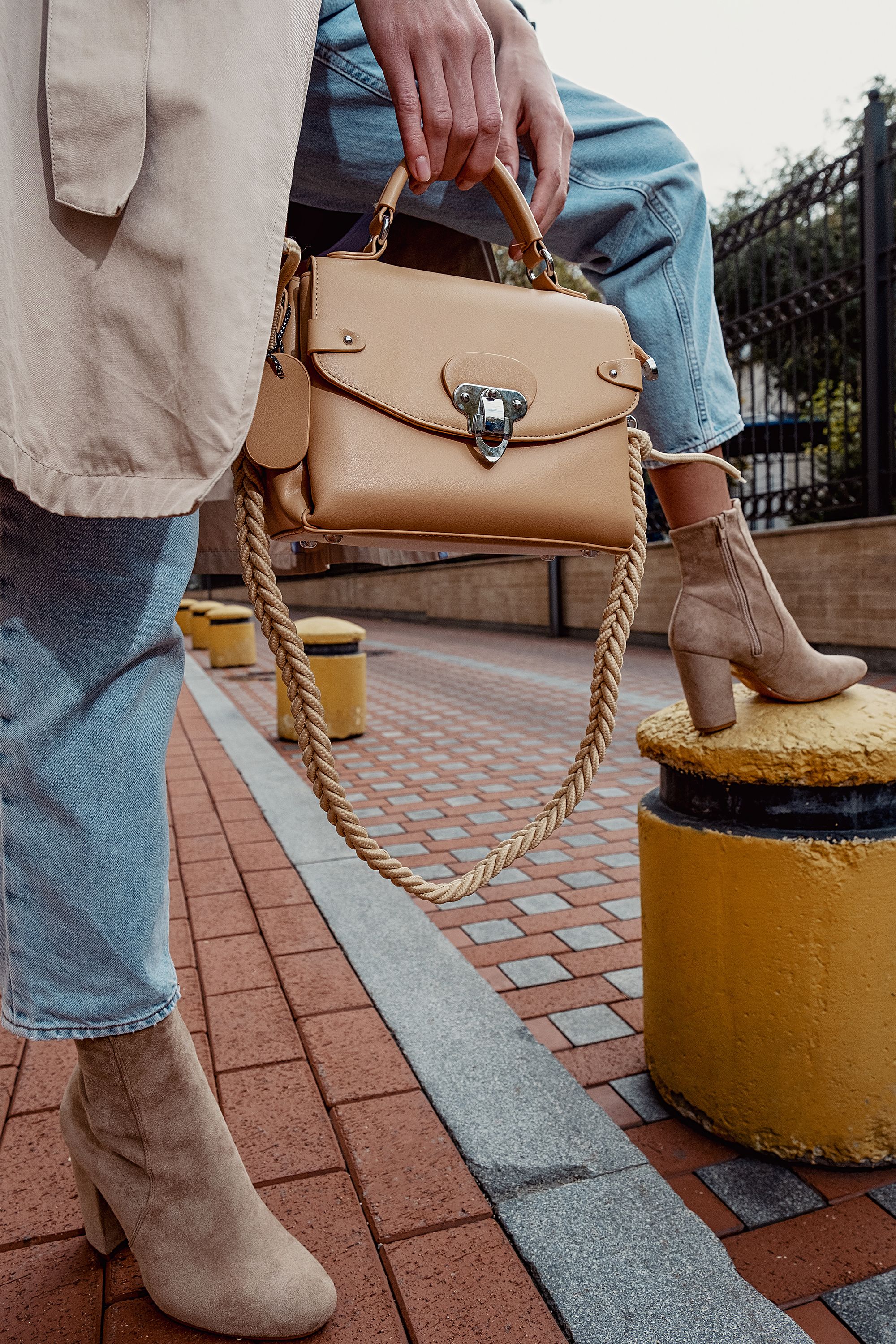
The backbone of the line, calfskin, is also the most forgiving material in it. Where smooth calfskin shows scuffs and shine, matte grained calfskin hides them, and polished saddle leather sits between them. A soft dry cloth after use is the whole of routine care, used with the grain and concentrated on the corners and base where dirt collects. Sparingly and infrequently are the operative words for a neutral conditioner, provided you test it on a hidden panel first. Over-conditioning leaves hide unevenly darkened, leaves a tacky surface and softens structure you want to keep. Pale calfskin also picks up dye from dark denim, so keep light bags away from indigo, and never scrub at a transferred mark, as scrubbing spreads it further.
Nappa and lambskin: linings more than exteriors
These two appear more often as linings than exteriors, which changes how you protect them. On the Margaux Shoulder the lining is lambskin, and the Bourse Clutch pairs a calfskin exterior with a nappa lining — which puts the softest material in the bag right where your keys sit. Exceptional softness, easy marking, and no tolerance for being worked on describe both. A dry soft cloth and nothing else is the correct answer, applied lightly and rarely. Avoid conditioner altogether, because these hides are already supple and over-treatment leaves a greasy sheen that will not come out. Real protection is a pouch inside the bag, not a product applied to it.
Suede: the most demanding material in the line
Suede is consistently the more expensive choice here, and it demands a matching increase in care. Observed 2026 market prices spell the gap out: India 10.00 sits at $3,850 in leather against $5,370 in suede, and Agnes 15 runs $5,000 in leather against $5,800 in suede. For the premium you get a nap that flattens, soaks up and stains faster than any finished hide. Most owners miss the key point: suede care is mechanical rather than chemical. Most routine wear is handled by a dedicated suede brush alone, used gently in one direction to lift the nap and clear surface dust. Anything wetter than that is a job for a professional.
- Give it a light brush after each wear, working with the nap rather than scrubbing across it.
- Natural drying at room temperature, no radiators or hairdryers, then a brush once it is fully dry.
- Work dry marks away with a suede eraser and the lightest pressure.
- Leave anything oily, coloured or set alone — send it to a leather specialist.
The list of what must never go on suede is short and absolute: no leather cream, no conditioner, no wet wipes, no soap and no water-based cleaner. What you get is a matted nap, or a ring that shows in every light. The realistic standard is prevention, not repair, since regular brushing outperforms any treatment across a year.
Raffia and sisal, canvas and nylon, silk and satin
Buy these knowing they are the least serviceable materials the brand uses. The sisal family and the woven raffia and linen totes are not tanned surfaces, so there is nothing to condition and no way to refinish a stained panel. Canvas and nylon wear well, though solvents and hard scrubbing do them no favours, which distorts the weave and leaves a clean patch that reads as damage. On silk and satin, water and skin oils leave permanent marks, including the small evening bags and knotted crossbody shapes. On every one of these, spot-cleaning with a barely damp cloth and prompt blotting is as far as home treatment should go. Prevention does all the work here, so keep them clear of rain and sunscreen.
| Surface | Regular routine | What to never do |
|---|---|---|
| Smooth and grained calfskin | Buff with a soft dry cloth; neutral conditioner used sparingly and rarely | Conditioning too often; soaking a mark |
| Nappa and lambskin | Dry soft cloth, light pressure | Anything creamy or conditioning |
| Suede | Suede brush and eraser; professional cleaning where there are stains | Anything wet: soap, wet wipes, water-based cleaners, and cream too |
| The raffia, sisal, canvas and nylon pieces | Spot-clean and blot; dry in the air | Soaking, solvents and hard scrubbing |
| The silk and satin pieces | Professional care; keep them dry | Any attempt to clean it at home |
Hardware and linings, the overlooked parts
The fittings are palladium-plated with a matte or brushed finish, and it is that finish you need to protect. Keep metal polish away from it: it is made for shine and will burnish a deliberately soft surface into something that no longer matches the bag. Give buckles and feet a wipe with a dry cloth, and dry them whenever they get wet, keeping moisture out of the join. The Margaux has engraved buckles and base feet, and those recesses trap dust that a soft brush clears better than a cloth. Vacuum cotton herringbone linings, as found in the Soft Margaux 10 and 12, instead of washing them. Look at the stitching where the handles meet the body every so often, because catching a loose thread early costs a small repair instead of a large one.
Between wears: storage that works
Good bags deteriorate quietly in storage, and the fix is cheap. Use the dust bag that came with it, lightly stuffed so the shape holds without stretching the sides. Acid-free tissue and soft cotton scarves both work, though never newspaper, whose ink transfers. Because shape survives emptiness but not weight, store bags upright on a shelf rather than stacked under others. Dark, dry and ventilated is what the space needs, with no sealed plastic boxes to trap humidity against leather. Rotating what you carry counts for more than owners expect, because a resting bag recovers its form.
When to hand the bag to a professional
Good row handbags get ruined when the line between maintenance and restoration is crossed at home, and that line is clear enough. If it involves colour loss, ink, oil, water rings on suede or a stretched handle, it belongs with a leather specialist. Structural work belongs there too: loose stitching at a stress point, a lining torn away from its seam. Because techniques built for coated canvas do not transfer, find out whether the specialist has handled unlogoed luxury calfskin. Discreet testing and an honest answer are what a good specialist offers, because untreated hide holds some marks for good. The resale discount from a botched home attempt outweighs the price of one competent intervention.